Few things can hinder your move like a safe that’s too heavy to lift and too wide to clear a stairwell corner. Safes and other heavy specialty items move differently from standard furniture. Weight alone rarely tells the whole story. The floor beneath the item, the route through the home and the equipment involved all shape a smoother, more controlled move.
With the right preparation, the heaviest pieces in your home can be handled with a clearer plan and fewer surprises along the way. This guide to moving heavy items explains how weight, equipment, route planning and professional support all factor into a safe, well-planned move.
Learning how to move heavy items starts with understanding how weight, balance and access change the moving plan. A safe, piano or oversized appliance may look manageable from one angle, then become more complicated once you account for stairs, flooring, turns and the space needed to keep the item steady. Planning around those details early gives you more control before moving day begins.
A large safe can concentrate hundreds of pounds into a small footprint, which places more pressure on the flooring than the same weight spread across a sofa. Balance adds another layer to the plan. Many safes are tall, dense and awkward to guide through tight areas, so small shifts in angle can change how the item moves. Most safes also lack handles or recessed grips built for their full weight, so the right equipment matters more than strength alone.
Safes vary widely by type and purpose, with many home safes ranging from around 200 pounds to 1,000 pounds or more. When deciding how to move a safe, that weight determines the equipment plan, the floor-support considerations and whether stairs are a practical route for the move.
Empty the safe before moving it, since documents, valuables and other contents add weight and can shift during transport. The door and hinges are often vulnerable points, so safes should stay upright whenever possible and should not be moved by the handle.
Once you understand the item’s weight and route, use these tips for moving heavy items:
Equipment matters more than muscle when heavy items need to be moved safely and steadily. The right tools also help protect the home around the item. Floors, trim, doorframes and stair edges all need attention before the piece starts moving, especially when the item cannot be easily stopped or redirected once momentum builds.
A hand truck rated for a safe’s weight on flat ground may not be the right tool for stairs. Weight ratings do not always account for inclines, tight turns or changes in balance during the move.
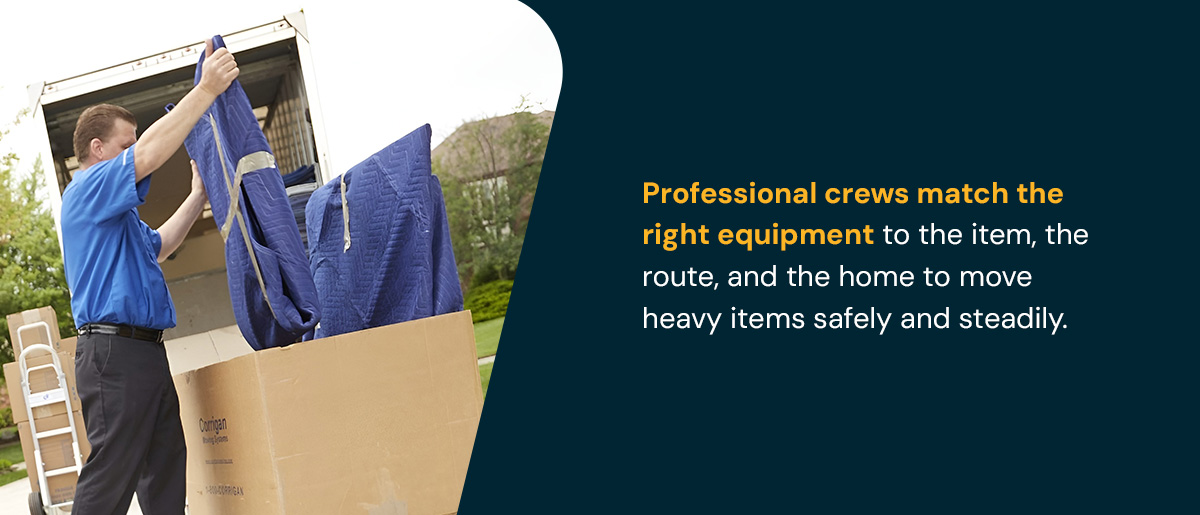
Professional crews often match the equipment to the item, the route and the home. For example, a short roll across a level room calls for a different setup than a basement safe, a second-floor piano or an appliance that has to turn through a narrow hallway.
Common equipment includes:
Safes are one type of heavy item that benefits from careful planning, proper equipment and trained handling. Homeowners often run into similar considerations with pianos, large appliances and bulky furniture. Each item brings a different mix of weight, shape and sensitivity, so a one-size-fits-all moving plan might not work for specialty pieces.
A grand piano is one of the heaviest items in many homes, but its finish, interior mechanics and balance require just as much attention as its weight. Wrapping and protection are the standard approach, since crating can damage certain finishes, particularly high-lacquer instruments.
Large appliances combine weight, awkward dimensions and components that need steady handling. Common examples include refrigerators, chest freezers, commercial-grade ranges and washing machines. Large furniture pieces, including solid hardwood armoires, marble-topped tables and slate-bed billiard tables, come with similar planning needs. The weight, material and shape all affect how the item should be wrapped, lifted and guided through the home.
Homeowners benefit from professional piano moving services built around this kind of specialized handling.
Professional help is often recommended for safes over roughly 500 pounds or for moves involving stairs or tight spaces.
A lighter safe on a flat, clear path may be manageable with the right equipment and enough people. Once stairs, tight turns or additional weight enter the plan, professional support becomes more valuable.
Professional moving companies typically handle loading and unloading as standard practice to support safe handling. Trained crews know how to guide heavy items through stairs, turns and elevation changes with steady control.
With a professional crew, you also get route assessment, floor protection planning, correctly rated equipment and valuation coverage for the item and the home.
During a visual inspection, trained crews can spot access constraints and map the safest approach before moving begins.
Moving a safe or heavy specialty item takes the right equipment, careful planning and experienced handling at each step. Corrigan Moving Systems’ crews have hands-on experience and handle heavy items such as pianos, oversized appliances and furniture with care.
Our residential moving services include local and long-distance moving services, so our experience can support your move from start to finish.
During your free in-home or virtual consultation, a Corrigan estimator inventories the items involved and builds the move plan around them.
Call us or fill out our form to schedule your free in-home or virtual consultation.