
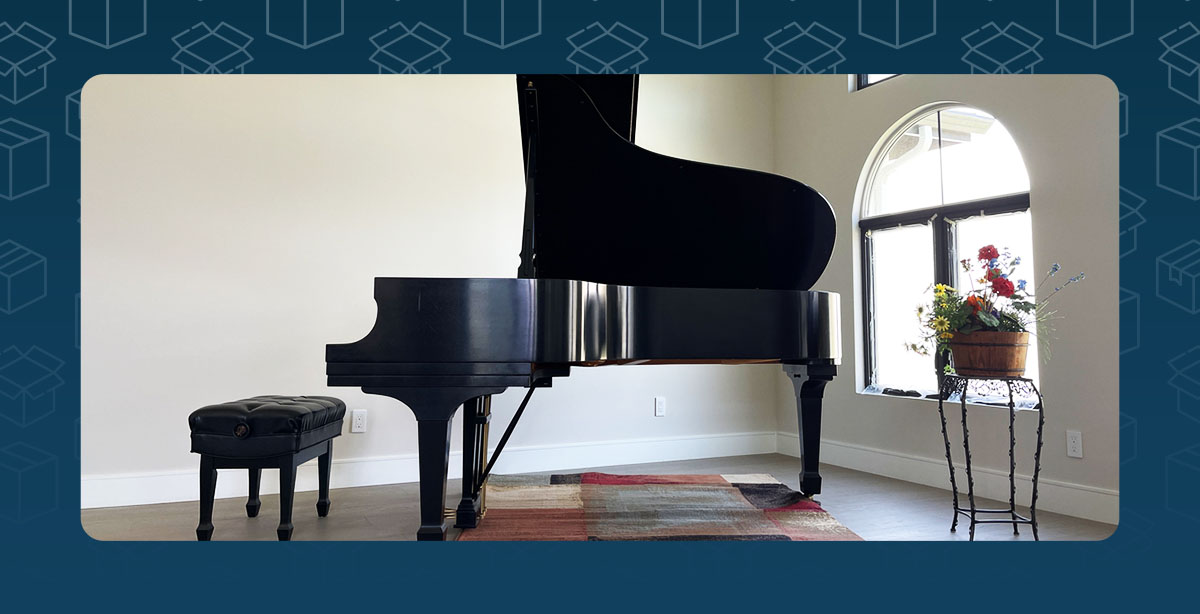
Moving a grand piano is significantly different from moving other pieces of furniture. This finely calibrated instrument has thousands of interlocking parts, a soundboard that reacts to every shift and a surface finish worth protecting. Moving it safely requires more than muscle and a dolly.
From the cast iron plate bearing 40,000 pounds of string tension to the delicate action mechanism inside, every component demands careful handling. This guide to moving a grand piano walks you through what makes the process unique, the equipment you’ll need and the step-by-step approach professionals use to protect your investment.
Grand pianos require a fundamentally different approach than standard furniture. Here’s what sets them apart:
Proper grand piano moving demands specialized tools. Understanding what the job requires helps illustrate why this task sits outside typical furniture relocation.
Here’s how a safe grand piano move unfolds, from first assessment to final transport. Each phase addresses a specific challenge and prepares the piano for the next stage. These tips for moving a grand piano reflect the approach professionals use to protect both the instrument and the people handling it.
Before anything is touched, measure doorways and hallways. Grand pianos won’t fit upright through a standard doorway, so knowing clearance dimensions ahead of time prevents surprises. Check flooring for point-load protection, especially on hardwood or tile. Assess stairs, tight turns and obstacles along the route.
Note the piano’s current condition, including existing scratches or finish imperfections, so there’s a clear record before the move begins. This preparation surfaces challenges early and allows you to plan the safest path.
Disassembling a grand piano correctly is essential to moving it without causing structural damage. Start by removing the lid. Unscrew the hinges carefully, then wrap the lid in blankets and store it flat. Next, remove the music stand if present. The lyre, or pedal assembly, comes off while the piano is still standing on its three legs. Unscrew it from the underside and set it aside.
Store all screws and hardware in labeled plastic bags for clean reassembly later. Grand piano legs must be removed before the piano is tilted. They’re not designed to bear the full weight during transport, and attempting to move the piano with legs attached can cause them to snap under pressure.
Once disassembly is complete, wrap the piano body fully in heavy-duty moving blankets. Secure the blankets with tape or straps, making sure every surface is covered. Wrap all detached parts individually, including the legs, lyre and lid.
The exterior finish is vulnerable to scratches, but the internal components are equally sensitive. The soundboard is typically just 3/8 inch thick Sitka spruce, and it reacts to both impact and humidity. Professional-grade wrapping protects both the visible surfaces and mechanics inside.
For specialty items like pianos, professional wrapping and protection provide the thoroughness this level of care requires.

With one leg removed, the crew carefully lowers the piano onto the piano board on its flat side. The remaining two legs are removed once the piano is secured. The piano is tightly strapped to the piano board, moved onto the dolly and loaded upright into the vehicle. Grand pianos are transported on their side, never flat. Transporting a piano flat risks damage to the soundboard and internal mechanisms.
Once inside, the piano is anchored with logistics straps to prevent shifting during transit. For longer moves, temperature and humidity shifts can affect wooden components and impact tuning stability. Knowing how to safely transport a grand piano means accounting for both climate and physical handling.
Deciding whether to move a grand piano yourself or hire professionals depends on understanding what each approach requires.
A DIY grand piano move is possible for short, simple relocations if you have the right equipment and enough trained hands. That means at least four people who understand the disassembly sequence, the tilt technique and how to navigate tight spaces with a heavy instrument. More people are needed for stairs, long carries or complex routes. It also requires specialized moving equipment that most households and even general movers don’t carry.
Professional piano movers bring a fundamentally different level of preparation and care when handling delicate items. They undergo specific training for grand piano disassembly, wrapping, loading and reassembly. They use purpose-built equipment designed for instruments of this weight and value. Most importantly, they carry accountability. If something goes wrong, there’s valuation coverage.
Delivery and reassembly reverse the preparation process. The piano is unloaded on the piano board, positioned in its new location, and the legs, pedal lyre and lid are reattached. Once reassembled, it needs time to adjust to the humidity and temperature of its new environment before tuning.
Climate is the primary driver of post-move tuning needs. Wood expands and contracts with changes in humidity, and the strings respond accordingly. You may need to schedule professional tuning after the move, once the instrument has stabilized. For instruments relocated over long distances, climate considerations play an even larger role in post-move care.

Safely transporting a grand piano involves a lot of moving parts, from specialized equipment and trained hands to attention to every detail. At Corrigan Moving Systems, our team brings nearly 100 years of moving expertise and Corrigan Academy training to every move. We understand the craftsmanship that went into building your instrument, and we bring the same level of care to protecting it with our specialized piano moving services.
Whether you’re moving locally or across state lines, we have the tools and dedication to handle your piano with precision. Ready to get started? Request a quote for piano moving today.