Moving furniture through a narrow stairwell or timing an elevator reservation perfectly is a logistical puzzle. However, with the right preparation and a clear game plan, overcoming moving day challenges like stairs and elevators becomes much easier.
Whether you’re hauling a sectional up three flights or coordinating a freight elevator window in a high-rise, success hinges on knowing what to measure, what to protect and when to book.
The smartest first step before moving a single box is checking your building’s access policies. Knowing these requirements before the move saves time, frustration and potential fees on moving day.
Get these details from your building management before finalizing your move date:
Get everything in writing, including reservation times, deposit amounts and any restrictions the building has in place.
Corrigan Moving Systems conducts a visual inspection of every move, meaning access constraints such as tight stairwells and elevator dimensions are identified well before moving day. If you’re in a high-rise building with stricter requirements, check out these tips for moving into a high-rise apartment.
Moving furniture up and down staircases without a hitch is possible with the right preparation. The key is knowing what you’re working with before the first piece of furniture leaves your apartment.
No amount of muscle will make furniture fit if the measurements don’t work. Accurate measurements help you avoid discovering halfway up or down a stairwell that your sectional can’t make the turn.
You’ll need the dimensions of every large piece you’re moving, plus your stairwell width, ceiling clearance at each landing and doorway widths along the route. Straight staircases give you the most wiggle room, while spiral stairs or curved designs with tight turns leave almost no margin for error.
Couches, wardrobes and tall dressers are the usual suspects that cause problems. Professional movers figure this out during the pre-move survey.
Protection goes both ways. Protect your furniture from the building and the building from your furniture.
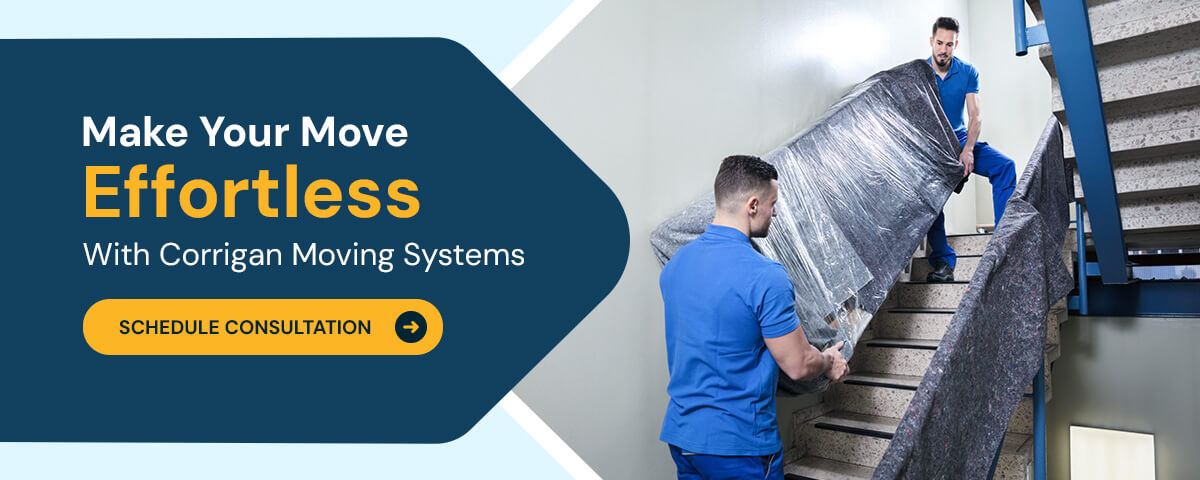
Clear the path as much as you can. If possible, move rugs, wall art and anything in hallways or on stairs out of the way. Then protect the high-contact zones by wrapping banisters and railings with moving blankets, covering stair edges with guards and laying down floor runners. Add door jamb protectors at every doorway along the route.
On the furniture side, remove drawers and shelves. Take off cushions and any detachable legs. The goal is to reduce weight and bulk before the move begins.
Furniture wrapping is always included with every Corrigan Moving Systems move. Want a full task list? Our complete moving checklist walks you through the prep work.
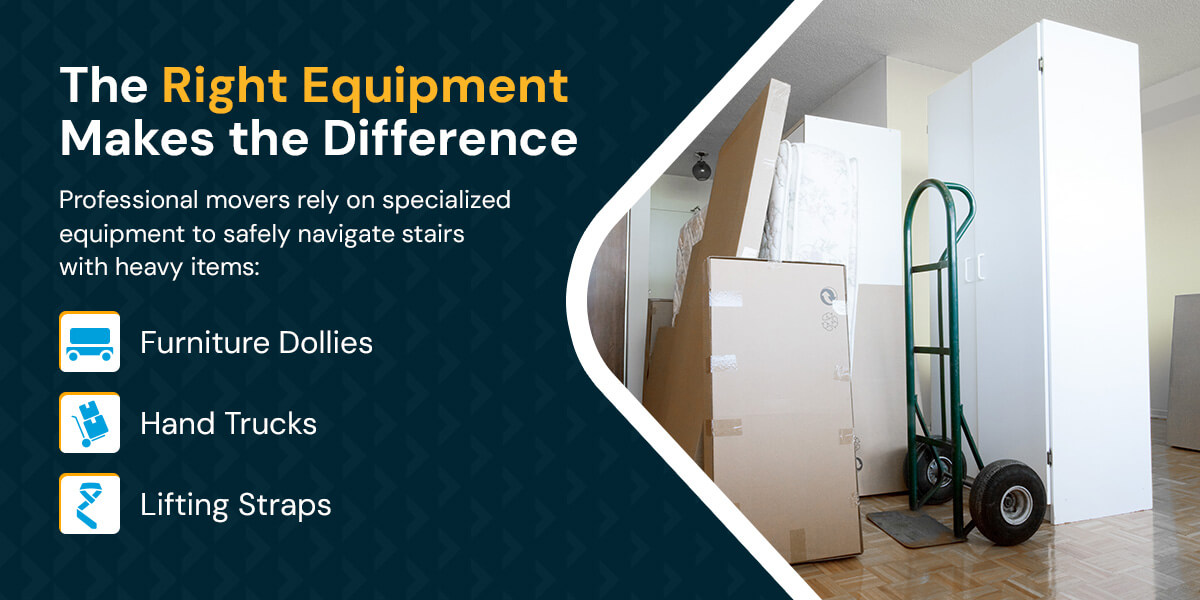
Professional movers rely on specialized equipment to safely navigate stairs with heavy items:
The stronger person takes the downhill position because they’re carrying more of the load, while the person at the top steers and calls out obstacles. Both movers move slowly and communicate before each step, pausing between flights to reset.
The right tools plus Corrigan Academy training protect both furniture and people.
Your building’s elevator is a major asset on moving day. Using it effectively starts with knowing what type you’re working with and maximizing every minute of your reservation window.
The difference between passenger and freight elevators can make or break your furniture-moving plan. Check with your building to find out which type you have.
Passenger elevators are typically 68 inches wide and 51 inches deep. Door openings measure around 36 to 42 inches wide. Weight capacity typically ranges from 2,500 to 3,500 pounds.
Freight elevators are significantly larger at 84 to 120 inches wide and 60 to 120 inches deep. Door openings range from 48 to 72 inches wide. Weight capacities run from 4,000 to 10,000 pounds.
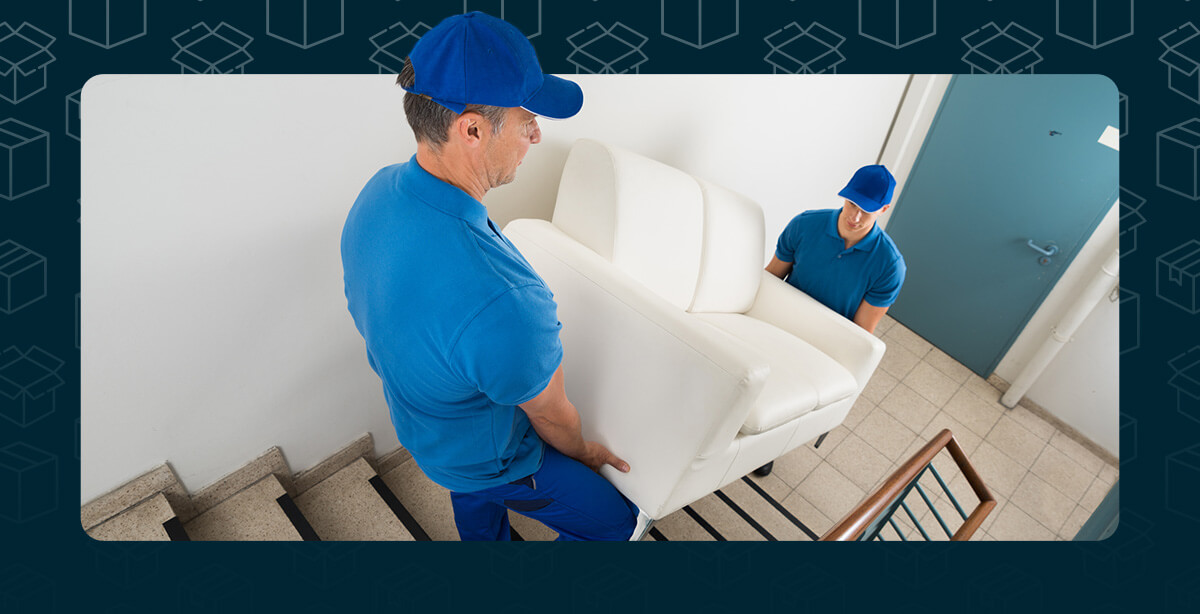
A standard three-seat sofa generally measures about 84 inches long and won’t fit on its feet inside a passenger elevator. You’ll need to stand it upright or take it up the stairs instead. Professional movers know how to assess this situation and can adjust accordingly.
Maximize your reserved time with these strategies:
Our crew manages all loading and unloading. If you need more apartment moving advice, our tips for moving to an apartment offer useful guidance.
Whether you’re navigating three flights or riding an elevator, these strategies keep things running smoothly:
Larger home moves may require more than one day, even locally.
Sofas, sectionals, oversized wardrobes, refrigerators and pianos are often the items most likely to create access challenges. Before the crew arrives, disassemble what you can by removing sofa cushions and legs, separating sectional pieces and taking apart bed frames or shelving units. Wrap everything thoroughly in Bubble Wrap and moving blankets to help protect each piece while moving through tight spaces.
Flag any specialty items during your pre-move consultation so the crew can plan ahead. If you’re moving in or out of an apartment or multistory building, specialized apartment moving services can handle access challenges.
Stairs, elevators, tight hallways — Corrigan Moving Systems has seen it all, and we’ve mastered every access challenge along the way. Our crew arrives fully prepared with the right equipment, from furniture pads and floor runners to piano boards and door jamb protectors. We conduct visual inspections before moving day, so access constraints are identified well in advance.
With over 90 years of moving experience and Corrigan Academy-trained teams, we navigate stairwells and elevator windows efficiently while protecting your belongings and the building. Ready to make your move effortless? Call us or fill out our web form to schedule a free virtual or in-home consultation. We’ll inventory your items, account for access requirements and create a plan that works.
Whether you need local moving services near you or specialized apartment moving services that understand the unique challenges of multistory buildings, Corrigan has the expertise to make it happen.